Why Mopping Your Grout Doesn't Actually Clean It
A mop moves dirty water across grout lines. It does not have the ability to lift soil back out of them, and that is the real difference mechanical cleaning makes.
September 9, 2026 · 3 min read
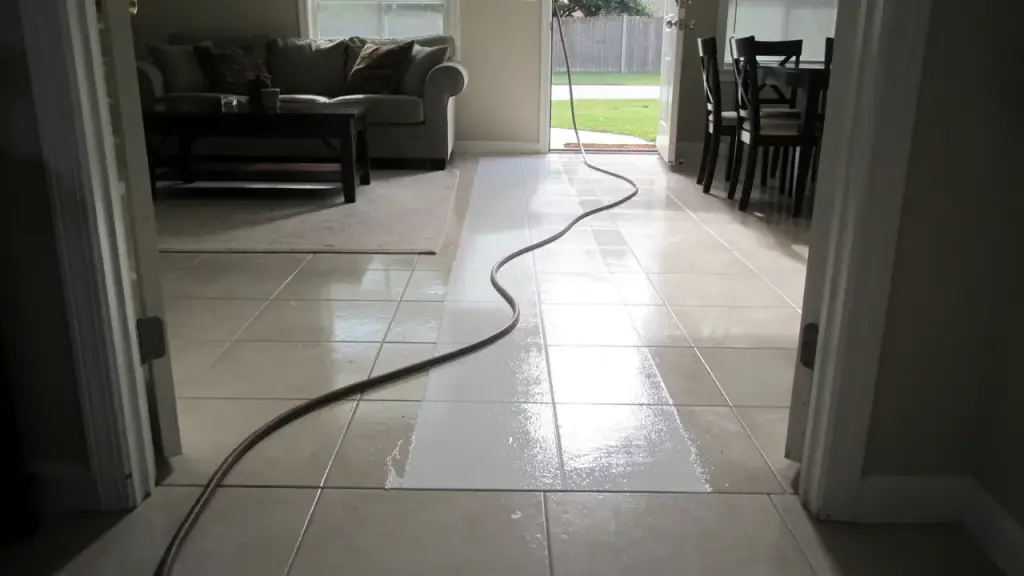
Grout gets dirty in a way that tile does not, and it is worth understanding why, because it explains why mopping a tile floor can leave the tile itself looking fine while the grout lines stay dull, gray, or discolored no matter how often you go over them.
Tile and grout are not the same surface
Tile, whether ceramic, porcelain, or stone, has a hard, mostly non-porous surface. Soil sits on top of it and a mop, wiping in a damp swipe, is enough to lift that soil and move it into the mop water. Grout is different. It is a cement-based material, and cement is porous. Soil does not just sit on top of grout, it works down into that porous surface the same way soil works down into carpet fiber, just at a smaller scale. Foot traffic, spilled liquids, and everyday grime get pressed into the surface pores of the grout over time, and a mop wiping across the top of that surface is not reaching down into the pores where the soil actually is.
What mopping actually does
A mop is a wipe, not a lift. It redistributes water and whatever is dissolved in it across a wide area, and in the process it often pushes some of that dirty water directly into the grout lines, since grout lines sit slightly recessed compared to the tile surface around them. That is part of why grout can look worse after a while of routine mopping rather than better. You are not cleaning the grout, you are periodically re-wetting it with water that already has soil suspended in it, and some of that soil settles right back into the pores it came from.
What mechanical scrubbing does differently
Mechanical cleaning works the grout surface directly instead of wiping across it. We use our own Tile Tool for this, which applies scrubbing action combined with cleaning solution directly into the grout lines and the tile surface, agitating soil out of the pores rather than just moving water across the top of them. That agitation is the part a mop cannot replicate no matter how much elbow grease goes into it, because a mop head simply does not generate enough mechanical force at the surface to break soil free from inside a porous material. Once the soil is broken loose, it gets extracted along with the water, rather than left to resettle.
- Tile: hard, mostly non-porous, soil sits on the surface and wipes off relatively easily
- Grout: porous cement, soil works down into it, and wiping alone cannot reach it
- Mopping: moves water and soil around the surface, does not agitate soil out of the grout
- Mechanical scrubbing: agitates the grout surface directly, breaks soil loose, then extracts it
Sealed grout still needs this, just less often
Sealed grout resists soil absorption better than unsealed grout, since the sealer fills the surface pores and gives soil less to grip onto. It slows the problem down, it does not eliminate it. Sealer wears with foot traffic and cleaning cycles over time, and once it has worn thin in a high traffic area, that section of grout starts absorbing soil again even though the rest of the floor still looks protected. A store-bought grout brush and a bottle of cleaner can help maintain a floor between professional visits, but hand scrubbing simply cannot generate the sustained mechanical force the Tile Tool applies, especially in grout lines that have gone a long time without attention.
What this means for how often it needs doing
Because grout is soaking up soil gradually rather than just holding it on the surface, it is not something you can fully reset with an especially aggressive mopping session, and it is not a sign you are mopping wrong. It is a sign the floor is due for a proper tile and grout cleaning. Kitchens, entryways, and bathrooms tend to need it more often than tile in lower traffic rooms, for the same reason hallway carpet wears faster than carpet under furniture, more traffic means more soil getting pressed into the pores. If your grout lines have gone gray or yellowed and mopping is not bringing them back, that is exactly the kind of job the Tile Tool handles. Call us at (334) 260-0999 for a free estimate.
Alabama Carpet Specialist, (334) 260-0999
Call (334) 260-0999More articles
Why a Bleach Spot Can't Just Be Cleaned Out
Bleach doesn't stain carpet the way coffee or wine does. It removes the color, and that's a different repair.
Why Your Hallway Carpet Grays Before the Rest of the Room Does
Traffic lanes are not dirt sitting on top of the carpet. They are fiber damage, and that changes when and how you should have them cleaned.