Why a Bleach Spot Can't Just Be Cleaned Out
Bleach doesn't stain carpet the way coffee or wine does. It removes the color, and that's a different repair.
September 9, 2026 · 3 min read
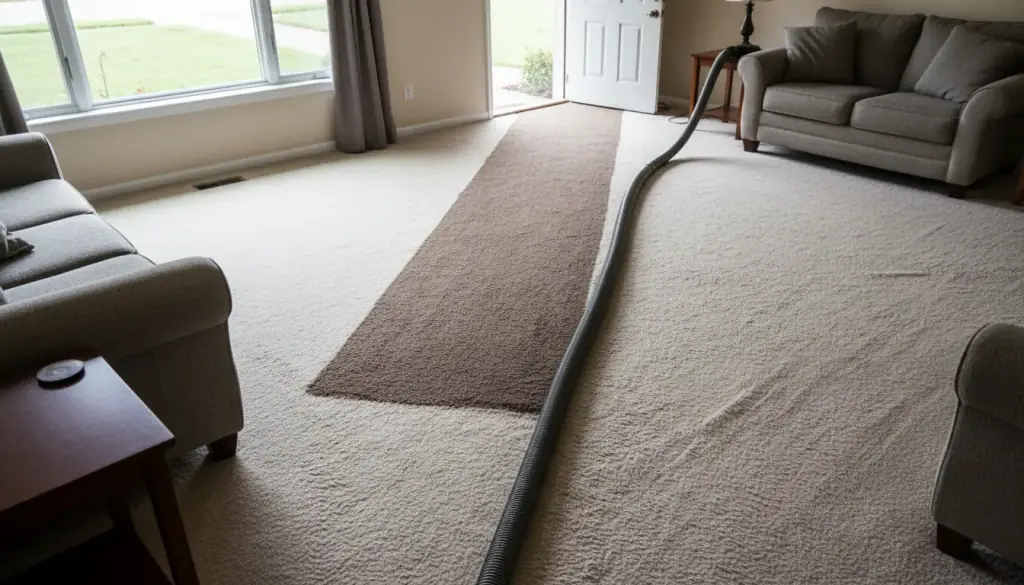
If a customer calls us about a spot that showed up after they used a cleaning spray, a hair product, or a pool chemical near the carpet, we can usually tell what happened before we even see it. That white or light patch that will not go away no matter how many times you clean it is not a stain in the way most people think about stains. It is bleach damage, and it needs a different kind of fix.
Staining and bleaching are opposite problems
A stain is something added to the carpet. Coffee, wine, mud, and pet accidents all deposit color into the fiber, and the right cleaning process lifts that color back out. A bleach spot works the other way around. Bleach is a chemical that strips color out of the fiber's dye. It does not add anything that can be extracted. Once the dye molecules in that patch of carpet are broken down, the fiber underneath is left its natural, undyed color, which is usually a pale yellow or off white, no matter what shade the rest of the carpet is.
Why re-cleaning does nothing
This is the part that trips up a lot of homeowners. You spot clean the area with carpet shampoo, or you call in a cleaning service and have the whole room steamed, and the mark is still sitting there afterward, sometimes more obvious than before because the surrounding carpet is now cleaner and the contrast is sharper. Cleaning removes soil. It cannot put color back into a fiber that has already lost it. No amount of extraction, scrubbing, or solution strength changes that, because there is no soil left to remove. The carpet is not dirty in that spot. It is discolored.
What actually fixes it
The only real fix is dyeing the color back in, matched to the surrounding carpet. We have been doing carpet dyeing work for close to twenty five years, and bleach repair is one of the more common calls we get for it, right alongside full carpet dyeing and red stain removal. The process starts with matching. We take a color reading from an unaffected part of the same carpet, because carpet fades unevenly with sun exposure and foot traffic, so the dye has to match the carpet as it actually looks today, not the color it was when it was installed.
- Match the dye to the current color of the surrounding carpet, not the original shade
- Prepare the bleached area so the dye takes evenly across the damaged fibers
- Apply and set the dye, then blend the edges so the repair does not read as a patch
- Check the color match again once the area is fully dry, since wet dye reads darker than dry dye
Done properly, a bleach repair blends into the surrounding carpet well enough that most people cannot find it again once they know roughly where it was. It will not necessarily be invisible under a bright raking light at a steep angle, but under normal room lighting and normal use, it holds up.
Where these spots usually come from
Household bleach itself is the obvious source, but it is rarely the only one. We see bleach spots from all-purpose cleaning sprays used near carpet edges, from hair color and hair bleaching products dripped near a bathroom doorway, from pool and spa chemicals tracked in on wet feet or splashed from a bag by the door, and from some pet stain and odor removers that carry a bleaching agent even though the label does not always make that obvious. If you notice a light patch appear a day or two after using any of these products near carpet, that timing is a strong clue about what you are dealing with, even before we get eyes on it.
If you are looking at a spot like this right now, do not scrub it and do not try a stronger cleaner on it. Scrubbing can fray the fibers and make the eventual dye repair harder to blend. Give us a call at (334) 260-0999 and we can talk through whether it is a straightforward spot repair or something that needs a closer look.
Alabama Carpet Specialist, (334) 260-0999
Call (334) 260-0999More articles
Why Your Hallway Carpet Grays Before the Rest of the Room Does
Traffic lanes are not dirt sitting on top of the carpet. They are fiber damage, and that changes when and how you should have them cleaned.
The First Hour After a Flood: What to Do Before We Get There
What happens to a carpet in the first hour after water damage decides how much of it can be saved, and the pad underneath matters more than most people think.